


Rattle is the way to go around here.
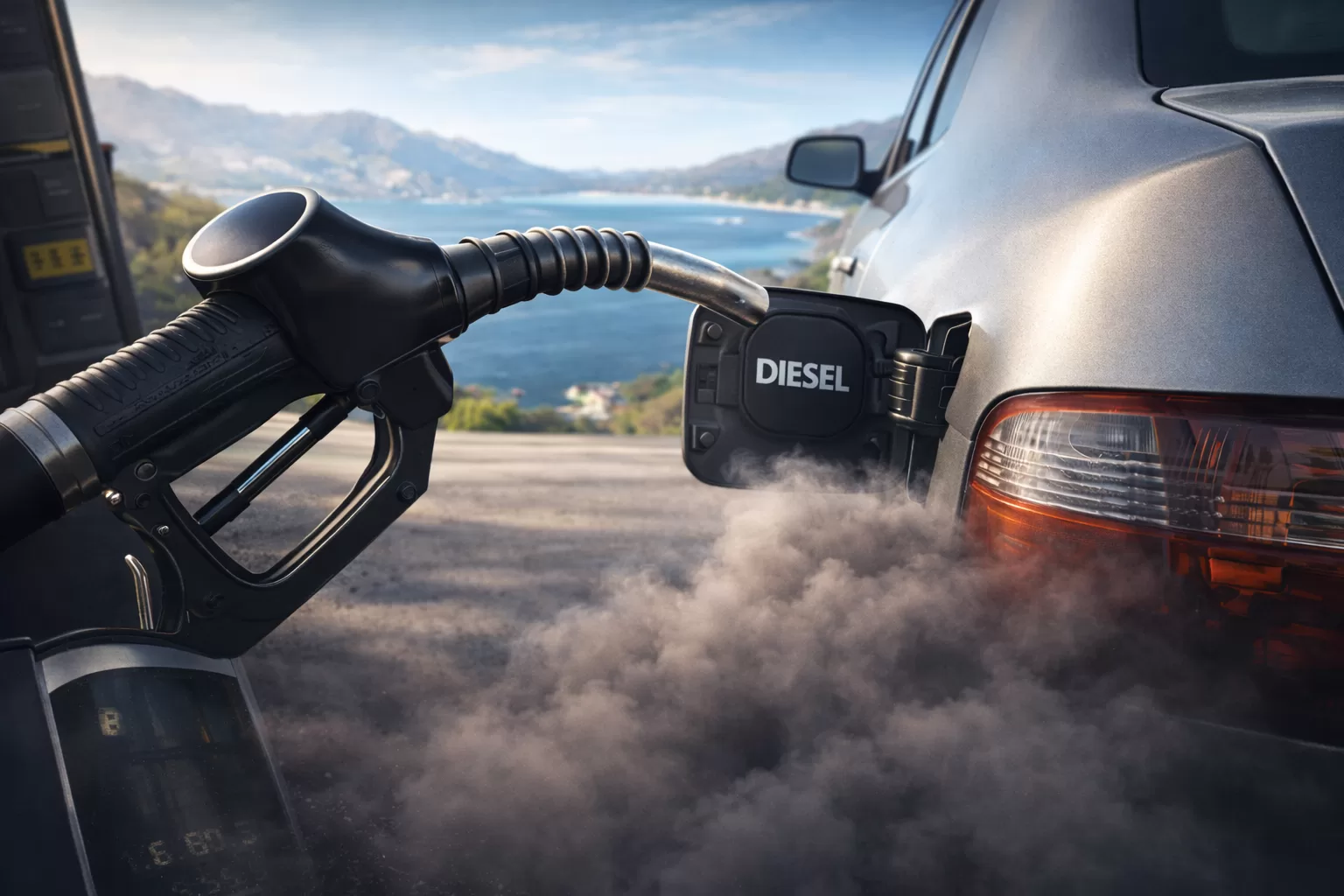
Driving between smaller towns and villages in Croatia, you’ll pass about a dozen diesel Golfs, Octavias and other cars before finding a petrol-powered car anywhere. The nation (and the broader Balkans region) is obsessed with diesel cars, often to the point of outright mocking anything that isn’t a Škoda or a VW with the 2.0 TDI powering it. It might not be that bad when compared with some of the neighbouring countries, but it’s still a long way to go from the petrol-and-EV future we are supposed to be looking forward to.
But why is this the case, and how does it affect the state of the cars on the road here?
Diesel is the default
Growing up in Croatia, diesel cars were always much more popular and easier to get than petrol ones Opening a quick search on Njuškalo, Croatia’s most popular used car sale platform, you’ll see around 49,000 vehicles on sale, both used and new. Out of that number, around 31,000 are powered by diesel engines This means that for every petrol car, there are almost two diesels.
Despite many car brands’ efforts to switch to petrol and electric power, almost 89 out of every 100 cars imported to Croatia are diesel, which is really an astonishing metric. Regarding vehicles imported from Germany, Croatia is behind only Ukraine regarding diesel-fueled cars. It’s no overstatement that the country runs on diesel: around 70% of our used vehicles are burning it instead of petrol.
The logical choice
In Croatia, where the cost of living is relatively high compared to the median income, many prefer driving diesel cars for the fuel savings. Diesel fuel has always been a bit cheaper here due to incentives and government support, so it pays off to drive a diesel just for the savings. In theory, at least.
Interestingly, diesel cars were more expensive than petrol-powered ones for the better part of my life. I remember my mom paying 5,000 EUR more for a diesel Toyota, just because it seemed like a more frugal option. She probably never did get that price back in fuel savings, but the psychological factor is probably more important than actual, real-world savings.
Diesels are also viewed as “tanks” and as reliable machines, despite probably being more complex to maintain than petrol equivalents due to EGR valves, DPFs, and other eco-friendly mods. For example, I own two diesel cars and the only large work that was done to both was because they are diesel. On my F20 BMW 120d, I had to change the EGR cooler as a part of a recall. On my Mercedes GLC, the entire AdBlue system decided to kill itself.
With diesel cars facing ever-growing scrutiny in the West, many cars that are too expensive to run there come to Croatia. I view us as the first step from Germany for a used diesel; they first come here, and then get sold into progressively more Balkan countries as they age.
Due to our lack of industry and excellent air quality, there’s not much incentive to buy greener cars that consume more fuel to save the environment.
The final nail
Since Croatia joined the European Union more than a decade ago, the number of imported cars, mostly German-made brands such as Volkswagen, Audi, BMW, and Mercedes, has increased dramatically. Almost every third car on the road is either a VW Group car or one of the premium German brands. Our police cars are diesel Škodas, many fleet cars are Octavias, and all are diesel.
While some brands do not offer diesels anymore, those brands are, interestingly, not all that interesting to Croatians anyway. We’d much rather import a five-year-old Passat diesel than buy a new Nissan or a hybrid Toyota, so as long as our favourite brands continue making diesels, we’ll continue driving them.
My perspective
I own two diesel cars, but did not want either to be diesel. It’s simply much harder to find a good petrol car here, so many of us don’t even try. I despise driving a diesel and do not enjoy anything, from the sound to the lack of rev range and the vibrations, but there’s much more choice in the used market if you’re willing to endure bad sounds and issues with DPFs and EGRs.
These issues are also amusing. You see, most Croatians drive shorter distances, which is the one thing diesels are not good at. Hundreds of articles and videos explain how you should let a diesel warm up properly and drive it longer distances at least once every couple of weeks so the engine can start regenerating the eco-friendly features, but that doesn’t worry an average Croatian. My next-door neighbour in Osijek drives a 20-year-old Passat TDI to go to the store located 500m away, which is probably the single worst thing you can do to a diesel car. If that were a modern AdBlue-chugging diesel, it would be caked in grease and grime already.
Many Croatians will argue that driving a car with all the ecological features enabled is a stupid idea, and that you should just do a DPF and EGR delete and drive without worries. That’s why black smoke from supposed “performance diesels” is often seen in Croatia. It’s easier to buy a 20-year-old 530d or an A4, delete the eco features and redline it all the time than to pay for the equivalent petrol version with none of the issues.
Some of the favourite “tuner” cars in Croatia are the e60 and e90 BMW’s, notably the 6-cylinder versions of the e60 and the “normal” 320d version of the e90. I have never in my life seen a diesel e92 driven by a person that does not look like a douchebag. As for the e60, the 530d is a cult classic here, with at least six different examples currently driving around my city by people who redline them all the time.
Our relationship with oil burners is a love-hate one, and our central argument is the fuel price, which has been relatively stable for a long time before this latest Middle-East crisis came. In this decade, petrol cars have made strides in economy, but we’re still ignoring them to drive cars that are louder, more complex, and worse to drive just to save a cent or two.
Today, a liter of diesel is 1.65€, and petrol is a tiny bit cheaper.